

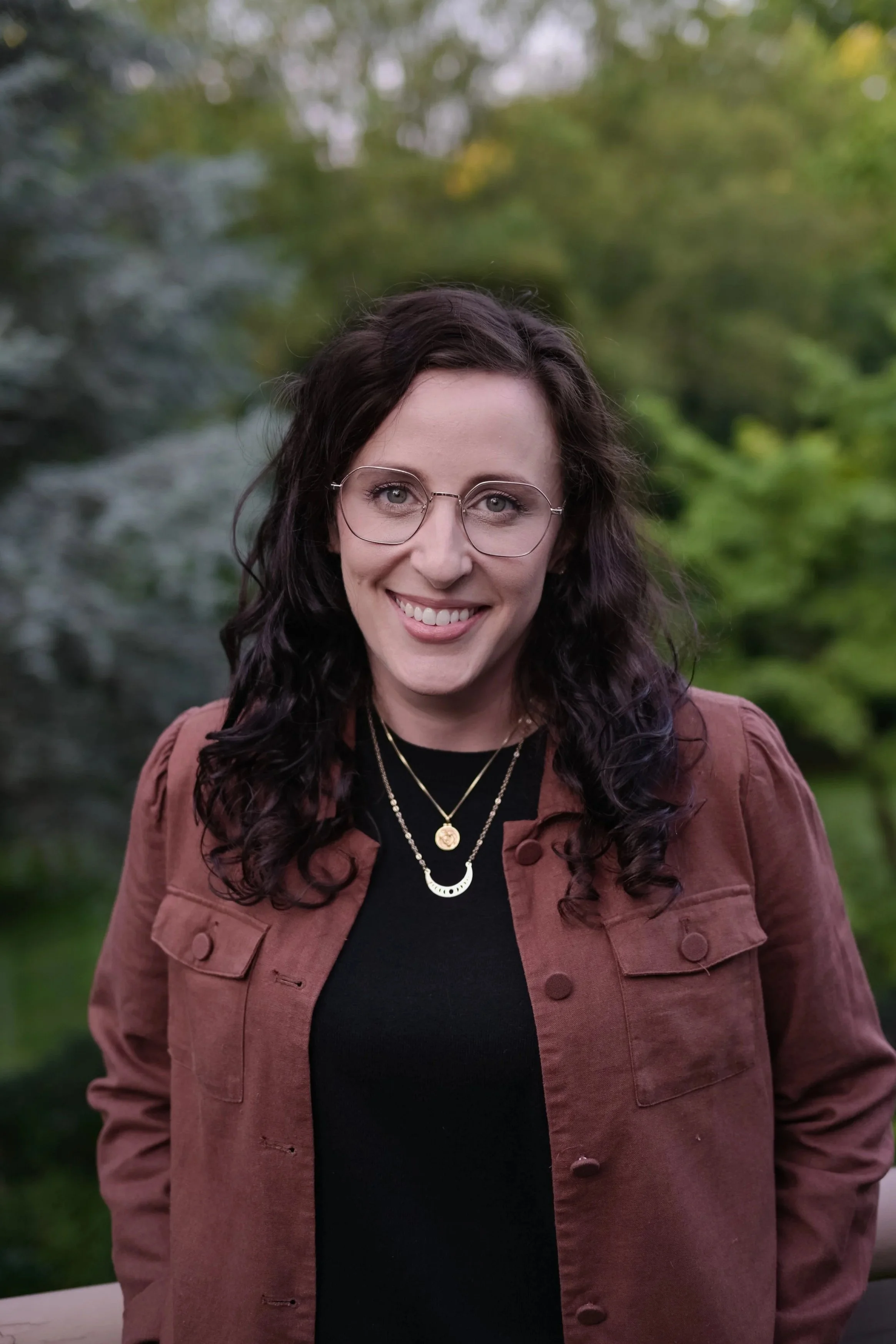
Heather McMasters, PsyD
Hi, I’m Heather, and I am the founder of Grounded Self Psychotherapy. I am a clinical psychologist licensed in Pennsylvania and authorized to provide virtual therapy in participating PSYPACT states.
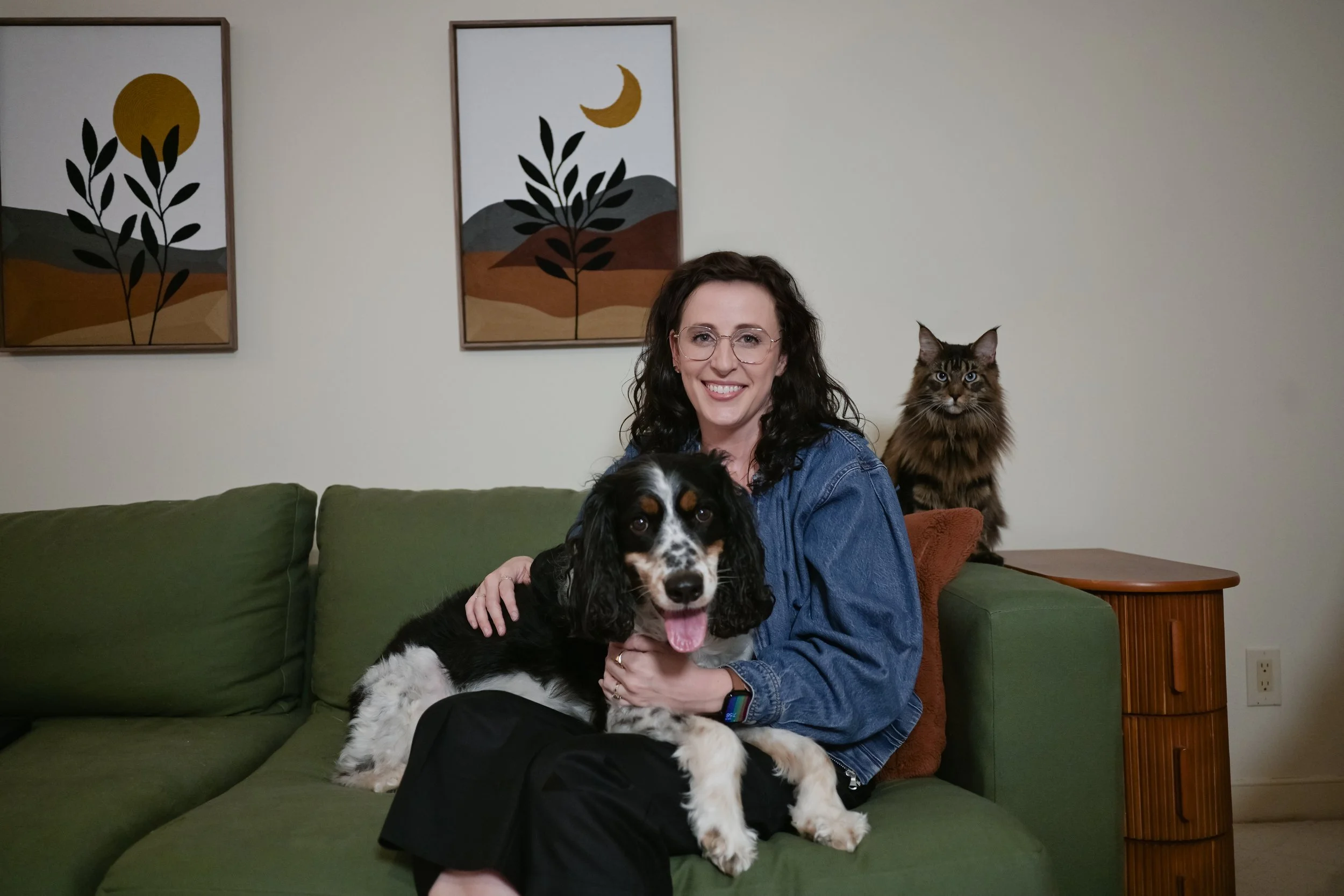
I live in the greater Philadelphia area with my wife, our springer spaniel, and two cats. I am a bit of a foodie and love having access to Philadelphia’s restaurant scene. I used to live in the city itself, but eventually traded city limits for grass and trees—a decision that has been good for my nervous system, although my ego is still adjusting.
I am a former college athlete and tennis coach, a lover of quality television, and someone who is constantly questioning why things are the way they are. I am also intentionally building a life that feels uniquely my own. That same spirit of curiosity and intentionality shapes my work as a therapist. Like many of my clients, I am working to build a life with intention. I try to notice the expectations society places on us, question whether those expectations are actually serving me, and create a life that feels authentically my own.
Intuition plays an important role in that process. I believe we each carry an internal sense of knowing, although years of stress, trauma, social conditioning, and external expectations can make it difficult to hear. Part of my own practice—and the work I support clients in doing—is learning how to listen to that wisdom again.
I take a holistic approach to therapy. Together, we will explore what is within your power to change, practice making room for what cannot be changed, and work toward a life with more support, care, freedom, and meaning.
I practice from a trauma-informed perspective, recognizing that painful, overwhelming, and destabilizing experiences can affect us even when they do not meet the formal diagnostic criteria for trauma. I am particularly interested in the ways chronic stress and trauma can affect the body and contribute to pain, tension, exhaustion, disconnection, and other physical symptoms. When appropriate, I incorporate somatic approaches that support healing in both the mind and body.
I earned my doctorate in clinical psychology from Widener University and have experience working with a wide range of clients. I have a particular interest in supporting members of the LGBTQ+ community, of which I am a part, including transgender, nonbinary, and gender-nonconforming people. I also work with people living with chronic illness and chronic pain, as well as individuals with complex or extensive trauma histories.
I am licensed in Pennsylvania and authorized to provide virtual therapy through PSYPACT to clients located in participating states. These currently include Alabama, Arizona, Arkansas, Colorado, Connecticut, Delaware, the District of Columbia, Florida, Georgia, Idaho, Illinois, Indiana, Kansas, Kentucky, Maine, Maryland, Michigan, Minnesota, Mississippi, Missouri, Montana, Nebraska, Nevada, New Hampshire, New Jersey, North Dakota, Ohio, Oklahoma, Pennsylvania, Rhode Island, South Carolina, South Dakota, Tennessee, Texas, Utah, Virginia, Washington, West Virginia, Wisconsin, and Wyoming.
My approach
My approach to therapy is rooted in the healing power of relationships and community.
I believe the systems and forms of oppression that permeate our lives create profound psychological, physical, and spiritual stress. That stress can manifest as depression, anxiety, chronic tension, headaches, digestive concerns, physical pain, lack of motivation, hopelessness, loneliness, burnout, or the feeling that you do not know how to build a life that feels meaningful.
Some of these experiences may fit within a clinical diagnosis, while others may not. Either way, your suffering is real and deserving of care.
My role as your therapist is to work collaboratively with you to understand your unique experiences, relieve suffering where we can, and help you create a life that feels more meaningful, connected, and fully your own.
I do not have all the answers—and no therapist does. But having a safe place to express the things that feel frightening, painful, or difficult to say aloud can have a profound impact. Being fully seen by another person can be transformational. It can also help you reconnect with your own intuition and wisdom, which will guide much of the work we do together.
I take a holistic approach to therapy. Together, we will explore what is within your power to change, practice making room for what cannot be changed, and build a life with more support, care, freedom, and meaning.
Clinically, I draw primarily from Acceptance and Commitment Therapy, psychodynamic therapy, relational therapy, and somatic approaches. Put more simply, I believe the relationship between you and your therapist creates the foundation for meaningful change.
Within that relationship, we can explore the ways you learned to survive, strengthen the strategies that continue to serve you, and adapt the ones that may no longer be working. This process can give you greater freedom to live intentionally rather than remaining bound by patterns that were formed during earlier periods of your life.

Questions you should ask your therapist
Finding the right therapist can feel overwhelming. These are some of the questions I encourage people to consider when deciding whether a therapist may be a good fit.
-
I work with adults of all genders and sexualities who are navigating depression, anxiety, trauma, chronic pain, burnout, and disconnection.
You may feel depleted, anxious, depressed, or alone. Perhaps your body feels heavy, and no matter what you do, you cannot shake the sense of dread. You may feel disconnected from yourself, your relationships, or the life you are living. You might be trying to understand why you react in certain ways, why familiar patterns keep repeating, or why it feels so difficult to move forward.
You may also be exploring your gender identity or sexuality and looking for support from someone who understands both the beauty of living authentically and the strength it can take to create that life.
Whatever brings you to therapy, you do not need to have everything clearly defined before reaching out. We can begin with what feels difficult and work together from there.
-
This is a complicated question because the answer depends on your needs, preferences, and goals. It is also shaped by a therapist’s graduate training, clinical supervision, and continuing education.
Finding a therapist who practices from a trauma-informed perspective can be a helpful starting point. Many therapists draw from several modalities and adapt their approach according to the needs of each client rather than applying the same method to everyone.
I am always happy to talk with you about the approaches I use most frequently, what those approaches look like in practice, and why I believe they may be helpful.
-
I voted for Kamala Harris.
Some people may feel that this question is too personal or political to ask a therapist. I do not. For many people—particularly those whose identities, relationships, families, healthcare, or safety have been politicized—a therapist’s values can help determine whether that therapist feels safe.
You deserve to know whether you are entering a space where you can speak honestly about your life without having to defend your humanity.
-
I believe this is often something you begin to sense fairly early.
The relationship between you and your therapist is one of the most important parts of effective therapy. You should feel respected, supported, and emotionally safe. You should also feel that you can be honest, disagree, ask questions, and bring up concerns about the therapy itself.
I often recommend scheduling consultation calls or initial appointments with more than one therapist when possible. Credentials and specialties matter, but so does the way you feel when you are speaking with someone. Pay attention to whether you feel heard, understood, and able to be yourself.
-
I believe the hierarchical systems created to separate and control people cause immense suffering. White supremacy, patriarchy, capitalism, colonialism, and high-control religion operate together in different ways to isolate us from one another and distract us from one of our greatest sources of power: community.
The field of psychology was developed within many of these same systems. Its history includes labeling women as hysterical, pathologizing the survival responses of Black and Brown people, and treating queer and transgender people as sick or in need of correction. It is a painful history within the profession I chose, and one that I believe we have a responsibility to confront and dismantle.
This is one reason I resist reducing people to diagnoses.
It may be useful to describe a collection of symptoms as depression, anxiety, or post-traumatic stress. A diagnosis can provide language, validation, and access to resources. But a diagnosis is not your identity. Many symptoms developed as understandable attempts to survive overwhelming, unsafe, or oppressive circumstances.
Our work may include exploring the ways these systems have shaped your experiences, relationships, self-concept, and understanding of what is possible for your life. Together, we will work to create an inner world that is as free from those constraints as possible.
From there, with support, you can begin building more of the outer world you want to inhabit.
-
I work with people experiencing trauma, anxiety, depression, chronic pain, burnout, and the persistent feeling of being overwhelmed, depleted, or on edge.
Some clients come to therapy with a diagnosis of post-traumatic stress disorder or complex post-traumatic stress. Others do not have a formal diagnosis but recognize that painful or overwhelming experiences continue to affect how they feel, relate to others, and move through the world.
I am particularly interested in how trauma and relational wounds during childhood can shape the nervous system, self-concept, relationships, and expectations we carry into adulthood. Healing these wounds can create greater freedom, helping you respond to the present rather than continually reliving the past.
You do not need to arrive with the right diagnosis—or any diagnosis—to begin therapy.
-
Deciding not to accept insurance was difficult because I believe everyone deserves access to high-quality mental healthcare. Insurance coverage is one way therapy can become more financially accessible, and that matters deeply.
At the same time, insurance-based treatment can create limitations that affect privacy, flexibility, and the therapeutic process.
When insurance is used, a therapist is typically required to assign a diagnosis and may need to submit treatment plans, billing information, or other clinical documentation. Insurance companies can also place limits on the type, frequency, or duration of treatment they will cover.
In a private-pay practice, decisions about your care remain primarily between you and your therapist. We can determine the pace, focus, and duration of therapy according to what is meaningful and helpful to you rather than what an insurance company considers medically necessary.
Private pay also allows me to maintain a smaller caseload. This gives me more time and energy to devote to each client and helps me offer thoughtful, sustainable care without relying on an unmanageable number of weekly appointments.
It also gives us greater scheduling flexibility and allows us to continue working together even when your experiences do not fit neatly within a diagnostic category.
Your records remain confidential except in circumstances required by law, when you authorize their release, or when disclosure is otherwise clinically or legally necessary.
-
I bring a deep appreciation for the ways psychological trauma and chronic stress can affect how our bodies feel, move, and function.
Emotional distress does not exist only in the mind. Stress and trauma may also show up as pain, exhaustion, tension, disconnection, difficulty concentrating, digestive issues, or a persistent sense that your body is working against you.
I am particularly interested in the relationship between trauma, chronic pain, and the nervous system. When appropriate, I incorporate somatic approaches that help us pay attention to what your body may be communicating—not as a problem to be fixed, but as an important source of information, wisdom, and healing.
-
My practice is entirely private pay. My full fee is $205 per 50-minute session.
I also reserve a limited number of sliding-scale appointments. Sliding-scale fees are based on your overall financial reality rather than income alone, recognizing that income does not always reflect debt, caregiving responsibilities, healthcare costs, generational resources, or other circumstances that affect a person’s ability to pay.
When discussing a sliding-scale fee, we may consider factors such as financial stability, access to savings, debt, housing expenses, dependents, healthcare costs, and other forms of economic support or strain.
The goal is not to require you to prove hardship. It is to arrive at a fee that is honest and sustainable for both of us.
A free 15-minute consultation is the best place to begin. During that call, we can discuss what you are looking for, whether we may be a good clinical fit, and what fee options are currently available.
To schedule a consultation, email heather@groundedselfpsychotherapy.com or call (302) 635-9116
Still have questions? Reach out!
Please note this is not a HIPAA compliant form. If you are sharing personal or sensitive information, please email me at heather@groundedselfpsychotherapy.com